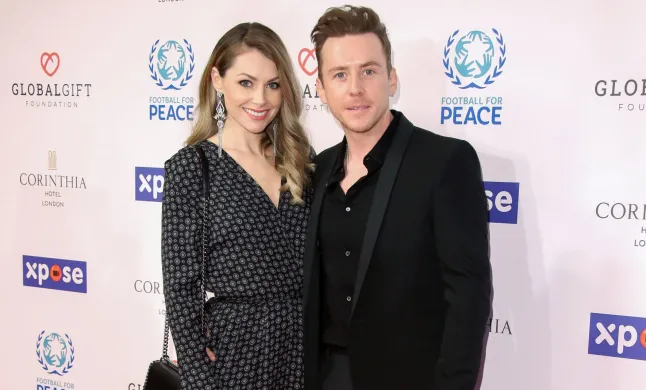
The Danny Jones wife news emerged in March after the McFly musician was photographed in what appeared to be a drunken kiss with television personality Maura Higgins at a BRITs afterparty. Jones, married to Georgia Horsley since their wedding over a decade ago and father to their seven-year-old son Cooper, issued a public apology shortly after the incident became public. What followed was a textbook case in image rehabilitation strategy: measured public statements, strategic social media activity, and calibrated timing designed to shift narrative from crisis to recovery.
The reality is that celebrity relationship crises operate on predictable cycles, and Jones and Horsley appear to have executed a containment strategy with notable precision.
Crisis Response Timing, And Why Immediate Acknowledgment Reduces Long-Term Damage
Jones issued his apology on Instagram within days of the photographs surfacing, a critical tactical decision. The statement was brief, direct, and focused on accountability rather than excuse. He apologized specifically to his wife and family, acknowledged the hurt caused, and stated his intention to address the matter privately.
From a practical standpoint, this approach accomplishes several objectives simultaneously. It preempts extended speculation by confirming the basic facts. It reframes the narrative from “what happened” to “what happens next.” And it establishes a boundary between public acknowledgment and private resolution, reducing the surface area for ongoing media engagement.
What I’ve learned is that apologies issued too late lose effectiveness because the narrative has already solidified. Jones’ team understood this, moving quickly enough to shape the response while the incident was still developing rather than waiting for full escalation.
Strategic Social Media Activity As Reputation Rehabilitation Signal
The Danny Jones wife news evolved through carefully timed social media posts that functioned as narrative checkpoints. Georgia Horsley returned to social media after a brief absence and posted a Father’s Day tribute to Jones, marking her first public acknowledgment of him since the scandal. Months later, Jones shared family vacation photographs with Horsley and their son, captioned simply and accompanied by visible displays of affection.
Here’s what actually works: these posts serve as confirmation signals without requiring explicit statements. They communicate relationship status, emotional state, and forward movement without reopening discussion of the triggering incident.
The data tells us that audiences interpret social media presence as validation. By appearing together in curated but authentic-feeling content, Jones and Horsley signaled recovery without having to verbalize it. Each post functioned as incremental evidence of stability, gradually shifting the dominant narrative from crisis to resolution.
The Reality Of Image Rehabilitation, And What Forgiveness Actually Requires
Reports indicated that Georgia Horsley temporarily moved out of the family home following the incident, taking time to evaluate the future of the marriage. This detail matters because it demonstrates consequence, a critical component of credible rehabilitation.
Look, the bottom line is this: public forgiveness narratives only work if there’s visible evidence of accountability. If Horsley had immediately posted supportive content without any indication of disruption, it would have appeared performative or coerced. The reported separation, followed by reconciliation, creates a more believable arc.
What this means in practice is that the Danny Jones wife news benefited from a narrative structure that included acknowledgment, consequence, and gradual recovery. Each phase was marked by specific actions or communications that signaled progression through the crisis cycle.
Platform Dynamics, And Why Potential Public Encounters Matter
As reigning I’m A Celebrity champion, Jones was expected to attend the National Television Awards in September. Maura Higgins, the woman he was photographed kissing, was also expected to attend, creating the possibility of an awkward public reunion.
From a reputational standpoint, these potential encounters carry significant narrative weight. How individuals behave in forced proximity after public scandal becomes its own story, capable of either reinforcing recovery narratives or reigniting crisis.
Organizers reportedly planned careful choreography to avoid direct interaction, a recognition that platform dynamics can override personal intentions. What I’ve seen repeatedly is that public events after scandals become high-stakes performance environments where every gesture is analyzed for subtext.
Audience Response Patterns, And What Comments Reveal About Rehabilitation Progress
The Danny Jones wife news tracking through social media comments shows a predictable pattern. Early responses to Jones’ vacation posts included both support and skepticism. Some users emphasized Georgia’s beauty and implied Jones should appreciate what he had. Others explicitly referenced forgiveness, suggesting they were “glad” the couple had reconciled.
These responses function as real-time polling of public sentiment. The mix of support and residual criticism indicates the rehabilitation narrative is progressing but hasn’t fully displaced the original scandal from collective memory.
From a practical standpoint, this is expected. Complete narrative erasure is rare in celebrity contexts. The more achievable goal is shifting the balance so that positive or neutral sentiment outweighs negative, allowing the individuals to move forward without constant reference to the crisis.
The Danny Jones wife news ultimately demonstrates how strategic communication, visible accountability, and calibrated timing can guide a relationship crisis through predictable recovery phases. The effectiveness of the approach depends less on erasing the incident and more on establishing a competing narrative of resilience and repair that gradually becomes the dominant story.